
Skip to content
SideIncomeHQ
Tool deep dive

Semrush review: what the bill really is

Semrush is an all-in-one marketing platform built around keyword research and daily rank tracking, starting at $139 a month with a 7-day trial. This Semrush review covers what each core module does, the current September 2026 plan prices, the add-ons that quietly double the invoice, and the point where a cheaper tool is the smarter buy.

Last updated

From
$139/mo
Free tier
Demo only
Best at
Keywords + PPC
Watch for
Add-on creep
At a glance
What each Semrush plan costs
Free: Free. SEO: $139. Starter: $199. Pro+: $299. Advanced: $549FreeA demo, not a working tierFreeSEO5 sites, 500 keywords daily$139StarterAdds AI visibility tracking$199Pro+15 sites, 1,500 keywords$299Advanced40 sites, 5,000 keywords, API$549
Bars drawn to scale, per month. Free tiers shown in amber.

Some links here are affiliate links: if you buy through them we may earn a commission at no extra cost to you. It never changes what we recommend.

Content calendar planning at a standing desk, mapping a month of SEO tasks on a paper wall grid
Quick facts
Built for
Keyword research at scale, daily rank tracking, competitor and PPC data
Entry price
SEO plan at $139/month (checked September 2026)
Free tier
Limited free account, a few queries a day, one small project
Trial
7-day free trial on every plan
Skip it if
You publish occasionally, or you already pay for Ahrefs

this is one of those tools that… I like to use and people would also like to use this if you just don't have that much budget to spend on AHFS or Semrush.

Kasra Dash, SEO entrepreneur; part-owner of a 650+ site rank-and-rent agency; founder, The Masterminders Source: Best Free SEO Tools in 2026 (No Paid Tools Required)
Why this matters

An operator who could afford any suite naming Keyword Planner as the budget substitute, credibility the page cannot manufacture itself.

$139
SEO plan, per month
5 sites, 500 keywords tracked daily. The solo tier
$299
Pro+ plan, per month
15 sites, 1,500 keywords, historical data, content optimisation
~17%
Saved on annual billing
The SEO plan drops to $117.33/month when paid yearly

Prices checked September 2026. Confirm current figures on Semrush's own pricing page before subscribing.

What Semrush actually does

Semrush pricing after the 2026 rename runs $139, $199, $299 and $549 a month, with annual billing taking roughly 17 percent (semrush.com, read 2026-09-05) off each of those figures.

Semrush is the broadest of the mainstream SEO platforms, and its center of gravity is keywords. Keyword Magic takes one seed term and expands it into thousands of related queries with volume, difficulty and intent labels.

The fastest legal way to map a topic before you write a word of it. For anyone building a content plan rather than chasing individual posts, that single module does most of the work.

Around it sit Position Tracking for daily rank checks against named competitors, Site Audit for technical crawls, and domain reports that estimate what any competitor ranks for and roughly what that traffic is worth. The suite is deliberately wide: one login instead of four tools.

That breadth is also the trap, because you are billed for all of it whether you open it or not.

The four modules that justify the price

  • Keyword Magic: topic mapping at a scale free tools cannot reach.
  • Position Tracking: daily, by device and location, against named rivals.
  • Site Audit: scheduled crawls, so you can prove a fix held.
  • Domain Overview: a competitor's keyword footprint in one screen.

If your honest answer is that you would use one of those four, you are looking at a $140 (semrush.com, read 2026-09-05) monthly subscription to replace a $29 one. That is the whole decision.

The honest buying order

  • Start with the free Google stack: your own real data costs nothing.
  • Add a budget keyword tool when research speed is the bottleneck.
  • Add Semrush when keywords, tracking and reporting are daily work: not weekly curiosity.
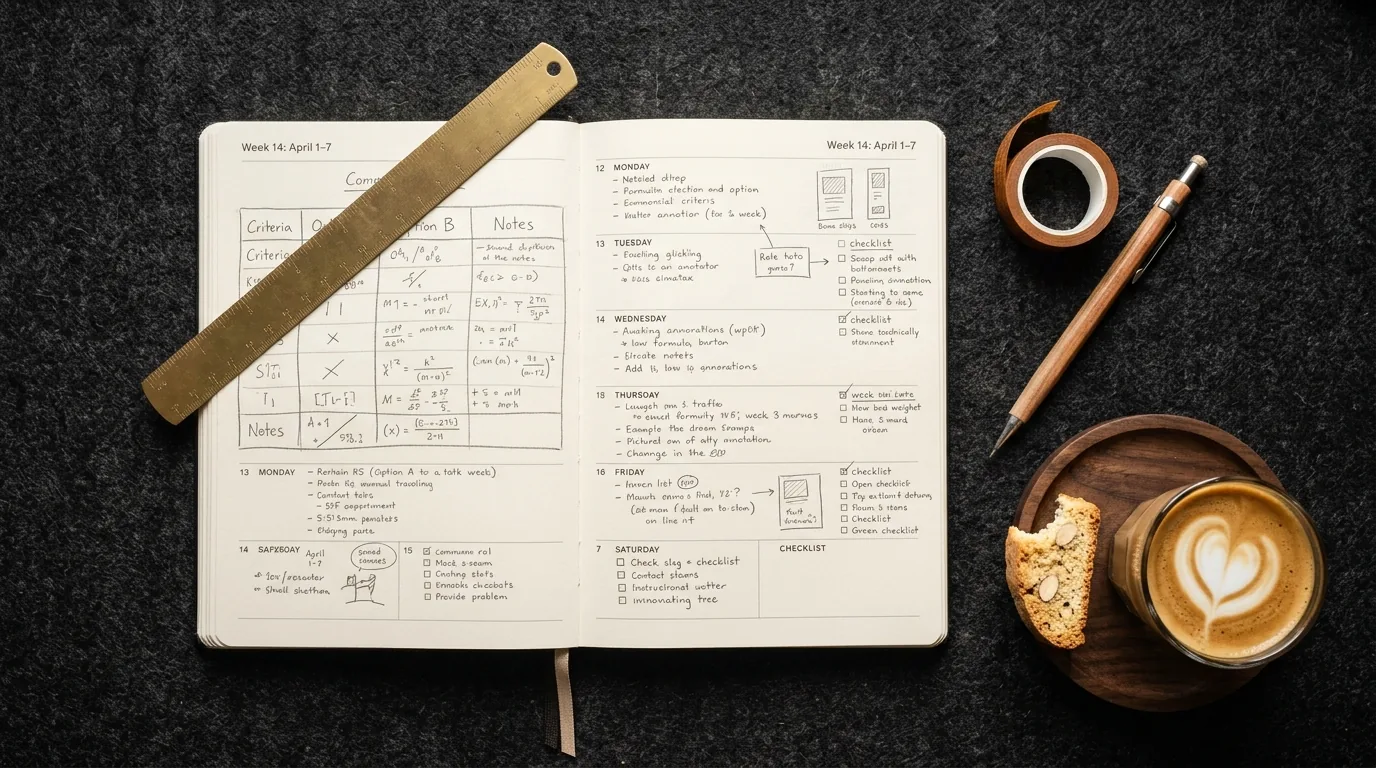
Weekly SEO planning flat lay with planner, sketched comparison table, and coffee under attic skylight
Plans and prices

What Semrush costs in September 2026

Three paid tiers and a demo-grade free account. The limits that bite first are projects and tracked keywords, not features.

Semrush plan tiers, monthly price, headline limits, and intended user
Free$0A handful of queries a day, one small projectLearning the interface only: not a working tier
SEO$1395 sites, 500 keywords tracked dailySolo site owners and freelancers
Starter$199SEO plus 50 AI prompts tracked daily, 1 domain for AI brand performanceSmall teams that also want AI-answer visibility
Pro+$29915 sites, 1,500 keywords, historical data, content optimisationAgencies and growing content teams
Advanced$54940 sites, 5,000 keywords, Share of Voice, API accessIn-house teams and larger agencies

What the price actually buys: keywords tracked daily

Comparison of SEO, Pro+, AdvancedSEO: 500 keywords. Pro+: 1500 keywords. Advanced: 5000 keywords.SEO500 keywordstracked dailyPro+1500 keywordstracked dailyAdvanced5000 keywordstracked daily
Daily tracked-keyword allowance by tier, read from semrush.com/prices on 2026-09-05. The tracked-keyword ceiling, not the feature list, is what most subscribers hit first.

The add-ons that change the maths

This is the part most reviews leave out. Semrush plans are single-seat, and several of the features people assume are included are billed separately.

Semrush add-on costs and why they surprise new subscribers
Extra user seat$45–$100 / month eachPlans are single-seat; a two-person team is not the sticker price
Trends~$289 / monthCosts more than the Pro plan it attaches to
AI Visibility Toolkit~$99 / monthThe 2026 upsell: tracking brand mentions inside AI answers
Local SEO$30–$60 / location / monthMulti-location businesses scale this fast
Advertising Toolkit~$99 / monthOnly worth it if you actually run paid search

A worked example: what a two-person team actually pays

Reviews quote the plan price. Invoices do not.

Here is a realistic basket for two people running organic and tracking AI visibility. Nothing exotic, no enterprise add-ons.

The total is roughly 40% above the headline, and every line of it is something a small team would plausibly switch on in month one. That is the number to compare against SE Ranking at $129 or Mangools at $29, not the $299 on the pricing page.

Do the same arithmetic for your own configuration before you subscribe. If the honest total lands near $400 a month, the question stops being "is Semrush good", it plainly is, and becomes "does this replace $400 of something else".

The basket, priced
Pro+ plan
$299
Second user seat
~$45
AI Visibility Toolkit
~$99
Monthly total~$394 (semrush.com, read 2026-09-05)

Against a $299 headline. Checked September 2026.

Price the whole basket before you sign up. The plan price is a floor, not a total.

Who it is genuinely for

Semrush earns its subscription in three situations. First, content operations: if you plan articles in batches and need a defensible keyword map for each one, Keyword Magic is faster than anything cheaper.

Second, client reporting: daily position data with white-labelled exports is what agencies are really buying. Third, mixed search teams, where the same person handles organic and paid and the PPC data avoids a second subscription.

It is the wrong purchase if you publish sporadically, if you already pay for the Ahrefs review, or if the thing actually limiting your traffic is that you shipped two articles last quarter. No amount of keyword data fixes an empty publishing schedule, and the tool is very good at making that feel like progress.

Where it beats Ahrefs, and where it loses

Semrush wins on breadth: keyword database size, intent labelling, PPC and advertising data, content tools, and local SEO reporting all sit in one place. It also wins on rank tracking, which is more granular and more configurable than most rivals bother with.

It loses on links. Ahrefs' backlink index remains the benchmark, and if your monthly work is "find out who links to the page beating me", that is the subscription to buy.

Semrush's link data is competent rather than category-leading. Read the Ahrefs review and pick on the job, not the brand.

Buy it when this is true

  • You publish to a schedule and plan content in batches.
  • Someone other than you reads a rankings report each month.
  • You run paid search alongside organic.
  • You will use at least three of the four core modules weekly.

Cheaper things that do one of its jobs

  • Mangools: keyword research and light tracking from about $29 a month.
  • SE Ranking. The closest all-in-one at a lower tier, strong on white-label reporting.
  • Search Console: your real click and position data, free, forever.
  • the SEO Spider crawler: technical crawls, free to 500 URLs.

Semrush is priced as an all-in-one and only makes sense if you actually use more than one of the ins.

SideIncomeHQ editorial
Why this matters

Count the channels you genuinely run, SEO, ads, social, PR. At one channel, a focused tool costs a fraction of this.

Trial plan

Seven days is enough. If you use them on one real task

The trial takes card details, so decide before it renews. Run it as a test with a pass/fail answer, not a tour.

Days 1–2

Build one real map

Take the next ten articles you intend to write and build the full keyword map in Keyword Magic. If that map is better than what you would have produced free, that is your answer.

Days 3–5

Track and audit

Set Position Tracking against three real competitors and run a Site Audit. Fix what it flags. A tool that surfaces one genuine technical fault has already done something free tools were not doing for you.

Days 6–7

Price the whole basket

Add up the plan, the seats you need and any add-on you have already started relying on. Compare that total, not the headline, against the cheaper alternatives. Then decide.

What Semrush cannot do for you

Every number in the platform that is not from your own connected property is a model. Search volumes, difficulty scores, traffic estimates and competitor keyword counts are all built from sampled data, which is why Semrush and Ahrefs rarely agree on the same keyword. Compare options against each other inside one tool; never quote the absolute figure as fact.

And it does not write anything. Google's own starter guide puts creating genuinely useful content above every other suggestion it makes.

Semrush shortens the research step. The publishing step, which is where most small sites actually stall, is unchanged.

Where this fits in the wider stack

Semrush sits at the top of the ladder in our the paid-tool guide guide, alongside Ahrefs. If you are picking a first paid tool, SEO software for small business covers the middle tier properly, and how to pick keywords shows the workflow this tool is meant to accelerate.

Where this sits
The spending ladder, bottom rung first
Free stack ($0): Search Console, GA4, Trends, Keyword Planner. Budget suite ($11–49): Mangools, Ubersuggest, AnswerThePublic. Mid all-in-one ($49–129): SE Ranking, Morningscore. Paid platform ($99–449): Ahrefs, Semrush, Surfer The highlighted rung is paid.Paid platformAhrefs, Semrush, Surfer$99–449YOU ARE HEREMid all-in-oneSE Ranking, Morningscore$49–129Budget suiteMangools, Ubersuggest, AnswerThePublic$11–49Free stackSearch Console, GA4, Trends, Keyword Planner$0
Semrush sits on the top rung with Ahrefs. Add-ons and seats can push a real bill well past the headline price.
Method

How we researched Semrush

No multi-month hands-on trial of Semrush sits behind this page, and nothing here implies one does. The figures come from the vendor's own published documentation and plan pages, checked in September 2026, read alongside the pattern of complaints and praise in public user reviews.

Our full sourcing standard, including the four claims we deliberately never make, is set out in our methodology.

The commercial part, stated plainly

  • Some links on this page pay us a commission and carry rel="sponsored".
  • The order of our recommendations is not for sale, and never has been.
  • Full terms are in our disclosure policy.

Semrush renamed its whole plan ladder during 2026

Semrush renamed its whole ladder during 2026, which quietly broke most comparisons of it. The published plans are now SEO at $139, Starter at $199, Pro+ at $299 and Advanced at $549 a month, or $117.33, $165.17, $248.17 and $455.67 on annual billing.

Pro, Guru and Business are gone. A review still quoting Pro at $139.95 or Guru at $249.95 is not simply out of date on a number - it is comparing tiers that no longer exist, which is why the comparison table on this site carries the date it was read.

What this does not say: Prices and plan names are the vendor's and change without notice; regional pricing and promotions vary.

Semrush Pricing and Plans (2026-09-05)

FAQ

Semrush Review: your questions, answered straight

What does the SEO plan actually monitor?

Five websites and 500 keywords tracked daily on the $139 tier, read from the vendor pricing page on 2026-09-05.

Is the free Semrush account usable?

Not as a working tier. It is a demo: a few queries a day on one small project, enough to see the interface and not enough to finish a piece of research. Treat it as a tour rather than a free plan.

How much does Semrush cost in 2026?

Checked in September 2026, the lineup is SEO at $139 a month, Starter at $199, Pro+ at $299 and Advanced at $549, with roughly 17% off for annual billing: $117.33 a month for the SEO plan. Semrush renamed the old Pro, Guru and Business tiers during 2026 and folded AI-search tracking into the higher plans, so older reviews quoting $139.95, $249.95 (semrush.com, read 2026-09-05) and $499.95 (semrush.com, read 2026-09-05) are describing a lineup that no longer exists. Every plan includes a 7-day free trial. The number that surprises people is not the plan price but the add-ons: extra seats, Trends, AI visibility tracking and local SEO are all billed separately.

What is Semrush actually used for?

Four jobs carry the subscription. Keyword Magic expands one seed term into thousands of related queries with volume, difficulty and intent. Position Tracking checks your rankings daily against named competitors. Site Audit crawls your site for technical faults. Domain reports estimate what any competitor ranks for and what that traffic is worth. Everything else in the platform is breadth most subscribers never touch.

Is there a free version of Semrush?

There is a free account, but it is a demo rather than a tier you can run a site on: a small number of queries per day and one limited project. Use it to learn the interface and to sanity-check whether the paid workflow suits you. For genuinely free daily work, Search Console and Analytics 4 remain far more useful.

Semrush or Ahrefs, which is better?

Neither, in the abstract. They overlap on keywords, rank tracking and audits, and almost nobody needs both. Semrush is stronger if you want keyword breadth, PPC data, content tools and reporting in one login. Ahrefs is stronger if backlink and competitor link analysis is your daily job. Take both trials in the same week on the same real task, then cancel one.

Is Semrush worth it for a small blog?

Usually not at first. With a handful of posts there is nothing meaningful to track and the keyword database is more capacity than you can act on. The upgrade signal is workload, not ambition: when you are publishing on a schedule and research or reporting is the slowest step, the subscription starts earning back. Before that, a budget suite does the same job for a fifth of the price.

Why is my Semrush bill higher than the advertised price?

Almost always seats and add-ons. Plans are single-user by default, so a second person costs from $45 a month, and the Trends, AI Visibility, Local and Advertising toolkits are all separate line items. Before subscribing, write down exactly which modules you need and price the total, not the headline plan.

Does Semrush track AI Overviews and ChatGPT mentions?

Yes, through the AI Visibility Toolkit, sold as an add-on rather than bundled. It reports whether your brand appears in AI-generated answers. It is genuinely useful for brands with something to defend, and genuinely premature for a small site whose fundamentals are not yet in place: AI answers are assembled from pages that earn trust the ordinary way.

Can I cancel Semrush before the trial ends?

Yes, and you should treat that as the plan. The 7-day trial requires card details, so put the end date in your calendar the moment you sign up. Use the week on one real task (a full keyword map for your next ten articles, say) and decide on evidence rather than on how impressive the dashboard looked on day one.

Weighing Semrush against everything else?

See it next to the free Google stack, the budget suites and the other all-in-ones, sorted by what each one is actually built to do.

all sixteen tools compared

Sources

  1. Semrush Pricing and PlansSemrushread 2026-09-05
  2. SEO Starter Guide: The BasicsGoogle Search Centralread 2026-09-05

One line to close this Semrush review: the plan price is not the bill, because seats and several of the AI features are billed on top of it.

The Starter plan lands near $289 a month once a second seat is added at $45 (semrush.com/prices, read 2026-09-05).

Want your tool or offer in front of this audience?

We take a small number of sponsored posts and advertising placements each month, every one of them labelled. Tell us what you are promoting and we reply within two business days with rates and the next open slot. Everything we publish sits on SideIncomeHQ, and the archive is open before you decide.

Enquire about a sponsored post

Rates and formats come back with the reply. Every placement is labelled.

Advertise with us